


Pickleball is growing in popularity, and finding the right paddle is essential to optimizing your game. With so many options available, it can be overwhelming to know where to begin. Fear not! In this comprehensive guide, we'll walk you through everything you need to consider when choosing the ideal pickleball paddle. Don't worry, we'll leave out the sales pitches and focus solely on the key elements of buying a pickleball paddle.
How to choose the best pickleball paddle?
Choosing the best pickleball paddle involves tailoring its key components to the player's skill level and playing style. The crucial factor involves finding the right balance between core material and thickness, surface material, paddle weight, grip size, and handle length, based on each individual's needs.
While it's simpler to claim there's one best paddle suitable for all players, reality dictates otherwise. Players seeking more power and less control will prioritize different paddle materials and construction than those who prioritize control over power.

5 Elements for Buying the Best Pickleball Paddle
1- Pickleball Paddle Core Materials
What is the core of a pickleball paddle?
The core is the base structure of every pickleball paddle. It's often constructed in a honeycomb pattern and inserted between the paddle faces. Pickleball paddle cores are crafted from different materials, with various techniques and structural configurations.
What are the best core materials for pickleball paddles?
There are many options for core materials, but Nomex and Polymer materials are the most frequently used today.
Nomex Core Pickleball Paddles – Power: Nomex, a remarkably strong, dense, and lightweight aramid, finds its application in diverse fields, from military apparel to airplane flooring. Its structure comprises smaller but more abundant honeycombs than other composite materials, which increases the "sweet spot" area and makes it more robust. These characteristics contribute to Nomex cores generating more power on impact. However, due to its harder nature than polymer, Nomex cores tend to be noisier.
Polymer Core Pickleball Paddles – Power & Control: "Polymer" or "Poly" or "Polypropylene" is the predominant material in contemporary pickleball paddles. These cores offer you everything you need, regardless of your skill level. It's a blend of soft, flexible plastic, characterized by large honeycomb cells, that provides a soft feel, maximum control, and most importantly, a quiet playing experience. Polymer core paddles dominate the market, seen on local courts and professional events alike.
Pro Tip: If you're unsure which core type to choose, try a polymer core paddle.
Why are paddle core materials important?
The core material emerges as the essential component, serving as the secret powerhouse of your equipment. Each material presents unique advantages and limitations, catering to different playing styles and desired outcomes. Choosing the optimal core material is key to enhancing power, precision, and control, while minimizing shock and absorbing vibrations. It's essential to align the core material with your individual playing style to elevate your performance on the court.
Why is pickleball paddle core thickness important?
The core and its thickness play a significant role in paddle performance, often more than the facing material. Therefore, it's crucial to consider these aspects when looking for paddles.
A thick core enhances control with every shot by dampening the ball's impact against the paddle face. Conversely, a thin core generates more power.
Should I choose a thinner or thicker core?
The choice between a thin or thick paddle core largely depends on experience. For beginner players, it's generally advised to opt for a medium or thick core to facilitate control (16mm). Experienced players have more flexibility and can opt for a thinner core to increase power if needed. For those seeking a balance between the two, polymer core paddles with a thickness of about 13mm are recommended.
2- Pickleball Paddle Surface Materials
The facing or surface material of a pickleball paddle directly impacts its durability, spin potential, and ball control. The most common surface materials include graphite, fiberglass (composite), and carbon fiber.
Graphite Pickleball Paddles – Finesse Material: Graphite paddles offer excellent feel and control, creating a larger sweet spot. However, this also involves a trade-off in terms of relative power.
Fiberglass Pickleball Paddles – Power Material: Among the three surface materials mentioned, fiberglass stands out as the heaviest but also the most flexible option. Upon impact with a fiberglass face, the ball slightly compresses before springing off the paddle, much like a coiled spring releasing its energy. This combination of weight and elasticity allows for greater power generation.
Carbon Fiber Pickleball Paddles – A Blend of Finesse and Power: Pickleball paddles crafted from carbon fiber, like some BOOMA paddles, offer a harmonious blend of finesse and power. Lighter and stronger than graphite, carbon fiber, a subtype of graphite, strikes a balance, capturing desirable characteristics from both fiberglass and graphite paddles. This makes carbon a preferred surface material for versatile paddles, providing an optimal compromise between finesse and power.
While it may seem obvious, the surface material significantly influences your control and power in pickleball. Therefore, it's crucial to choose the paddle surface material that best suits your individual needs.
3- Pickleball Paddle Shape
Pickleball paddles come in various shapes, including traditional, elongated, and wide.
Traditional shaped paddles offer a balanced blend of power, spin, forgiveness, and maneuverability. They are suitable for most players.
Elongated paddles offer extended reach and are favored by players seeking power and spin. However, they have a smaller sweet spot and are less maneuverable than other shapes.
Wide paddles have a broader face and a shorter length. This design offers the largest sweet spot, making them forgiving for off-center shots but sacrificing reach and power.
How does the shape influence my paddle choice?
Paddle shapes vary greatly, but as long as the shape harmonizes with the core and face, you're on the right track. For instance, if you prefer an elongated paddle for more reach and power, opt for a paddle with a carbon fiber facing to increase the sweet spot size. Conversely, an elongated shape paired with a fiberglass face could reduce the sweet spot, which isn't the most favorable combination.
4- Pickleball Paddle Weight
The weight of a pickleball paddle significantly impacts your ability to maneuver it on the court. Paddles generally range from lightweight (7-8 ounces) to heavy (8.5 ounces and above).
Lighter paddles allow for better maneuverability and control, which can be a great advantage at the net during quick exchanges. The drawback is that you have to hit harder to generate more power.
Heavier paddles increase power and stability and require less powerful strokes to generate power due to their increased weight. This is an advantage for dinking, as shorter strokes reduce the margin of error and allow for a quicker return to a ready position.
Tennis players transitioning to pickleball will appreciate the feel of a heavy paddle compared to a tennis racket.
Generally, the best pickleball paddles for beginners will be lighter, while the best pickleball paddles for experienced players can be any weight, as they are more familiar with the adequate weight to support their game.
5- Pickleball Paddle Handle Length and Grip Size
Grips and handles are often used interchangeably, but when you add length and circumference to the equation, they mean completely different things. A paddle's handle length measures the grip between the butt cap and the paddle's neck, while the grip circumference measures the distance around the handle.
Holding a pickleball paddle and playing with it are the best ways to know what size suits your needs.
How does handle length impact paddle choice?
Some players prefer a consistent two-handed grip on the paddle, while others opt for a one-handed approach. There are also those who use two hands for backhands but switch to a single hand when at the net. For those exclusively using a two-handed grip, a handle length of at least 5.25 inches is recommended, although some may prefer even longer. Conversely, if you exclusively use one hand, a standard 5-inch handle length should suffice.
If you prefer to have your finger on the paddle face, similar to a ping-pong paddle, a shorter handle will be more appropriate.
In summary, short handles allow for better control and maneuverability, while long handles offer greater reach and leverage.
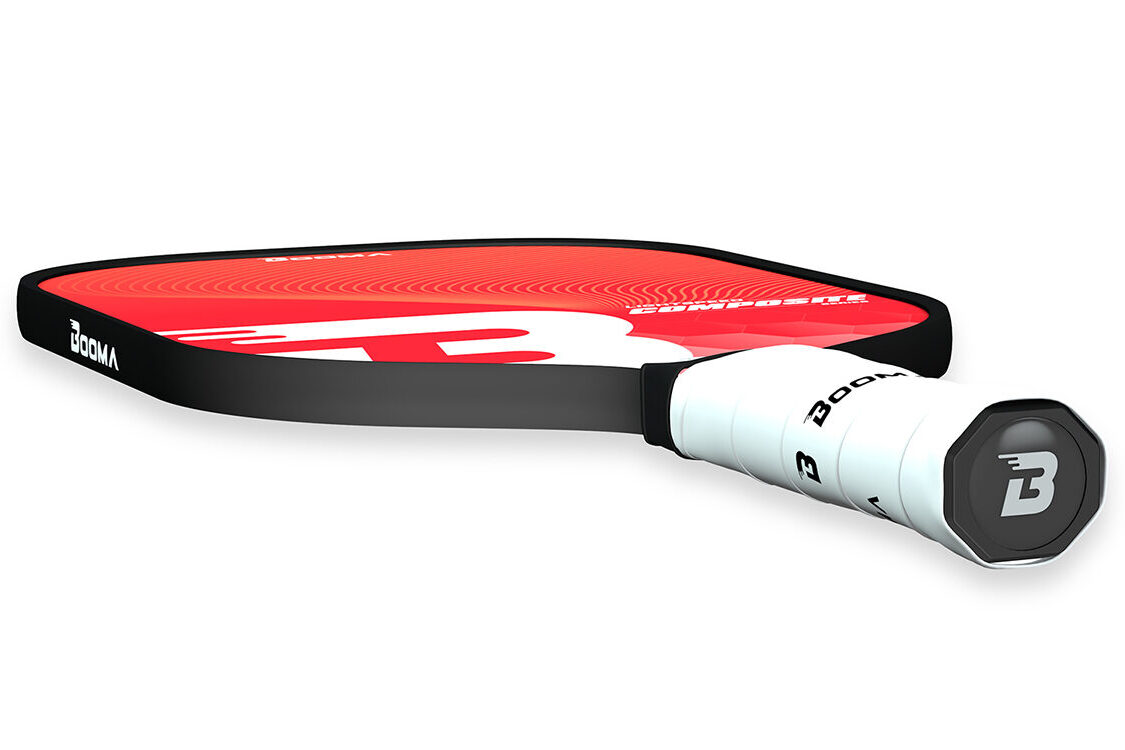
Finding the right grip
If you're on the hunt for the right grip size, it's essential to try different paddles with various grip sizes. Holding and playing with a pickleball paddle is the best way to determine the size that suits you. If you're unsure, it's advisable to opt for a slightly smaller grip size. This allows you the flexibility to add tape if needed to enhance grip comfort. However, if you choose a grip that's too large, you might find yourself needing to reduce it. Make it easy on yourself, go with a smaller size!
In conclusion
Choosing the right pickleball paddle is a personal decision that depends on your playing style, preferences, and skill level. By considering factors such as core type, facing material, shape, weight, and handle length and size, you can find the perfect paddle to elevate your game and enhance your enjoyment on the court. So, go ahead, explore your options, and get ready to dominate the pickleball court with confidence!
